History of the Scottish Rite
Exploring one of Freemasonry's most comprehensive and influential systems of degrees and philosophy.
Discover the remarkable history of the Scottish Rite, from its mysterious origins in 18th-century France to its development as a major Masonic system with 33 degrees, philosophical sophistication, and global influence. Learn about the philosophical teachings, ceremonial traditions, and the distinctive double-headed eagle emblem that has come to represent one of Freemasonry's most respected organizations.
Start Learning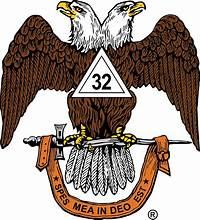
History of the Scottish Rite
The Scottish Rite represents one of the most sophisticated and philosophically complex branches of Freemasonry, developing centuries of ceremonial and intellectual traditions into a comprehensive system of 33 degrees.
The Foundation: Origins and Development
The Scottish Rite emerged from complex historical developments in 18th-century France, developing from the foundational three degrees of Craft Masonry into an elaborate system of additional degrees. Unlike the three Blue Lodge degrees that form the basis of all Freemasonry, the Scottish Rite created a parallel structure offering deeper philosophical instruction and more elaborate ceremonial experiences. The origins of the Scottish Rite remain somewhat debated by Masonic historians, with various theories concerning its development from French Masonry and its eventual codification.
The system eventually became standardized around 33 degrees, divided into four bodies: the Lodge of Perfection (4-14 degrees), the Chapter of Rose Croix (15-18 degrees), the Council of Kadosh (19-30 degrees), and the Consistory (31-33 degrees). This elaborate structure was designed to provide progressive philosophical and ceremonial instruction, exploring themes of ancient wisdom, enlightenment, virtue, and the spiritual development of the individual Mason. The Scottish Rite's philosophical approach differed significantly from the strictly operative and craft-based focus of traditional Freemasonry.
By the late 18th century, the Scottish Rite had established itself as a major system within Freemasonry, particularly in France and subsequently throughout Europe and North America. The distinct imagery and elaborate ceremonialism of the Scottish Rite attracted educated and philosophically-minded Masons seeking deeper esoteric instruction and more elaborate ritual work.
The Evolution and Expansion: A Detailed Historical Overview
French Origins and Standardization (1750-1850): Creating a Comprehensive System
The Scottish Rite's development during the late 18th century reflected broader Enlightenment trends within Freemasonry. While traditional Craft Masonry focused on architectural symbolism and basic moral teachings, the Scottish Rite developed an elaborate philosophical system incorporating elements of Hermetic philosophy, Kabbalah, alchemy, and various esoteric traditions. The double-headed eagle, which became the symbol of the Scottish Rite, drew from ancient Masonic and occult traditions, symbolizing vision and perception from multiple perspectives.
During this period, various Masonic bodies worked to standardize the Scottish Rite system and establish consistent structures. The Supreme Council of the 33rd Degree was eventually established as the governing body for Scottish Rite Masonry, creating hierarchical organization and ensuring coherence across different jurisdictions. By the early 19th century, the Scottish Rite had developed the structure of 33 degrees that essentially remains today, with progressive instruction moving through increasingly complex philosophical themes.
The philosophical content of Scottish Rite degrees explores themes including virtue, enlightenment, justice, wisdom, and the spiritual development of humanity. Unlike the three degrees of Craft Masonry which emphasize the building of the inner temple through moral development, the Scottish Rite extends these concepts through progressively more elaborate ceremonies and philosophical instruction, creating a comprehensive system of esoteric education.
International Expansion and Establishment (1850-1920): Global Influence
The 19th century witnessed the expansion of Scottish Rite Masonry throughout the world. French and German Masons established Scottish Rite bodies in various countries, adapting the system to local cultures while maintaining core philosophical principles. The Scottish Rite became particularly strong in the United States, where Supreme Councils were established in various jurisdictions. American Scottish Rite Masonry developed its own distinctive characteristics while remaining fundamentally connected to European traditions.
During this period, the Scottish Rite attracted intellectuals, professional men, and philosophically-minded Masons seeking deeper esoteric instruction. The elaborate ritual work, philosophical content, and intellectual approach of the Scottish Rite appealed to educated Masons dissatisfied with the simplicity of Blue Lodge Masonry. The Scottish Rite's emphasis on scholarly study, historical research, and philosophical contemplation created a distinct culture within the broader Masonic movement.
The establishment of the 33rd degree as the highest honor in Scottish Rite Masonry elevated distinguished Masons to this rank, creating a hierarchy recognizing exceptional service and wisdom. The 33rd degree became synonymous with leadership in Scottish Rite Masonry, with active and honorary members serving as governors and stewards of the system.
Modern Development and Globalization (1920-Present): Contemporary Relevance
Throughout the 20th and into the 21st century, Scottish Rite Masonry adapted to contemporary society while maintaining its distinctive traditions. The organization expanded educational programs, published extensive writings on Masonic philosophy, and emphasized the scholarly study of Masonic history and practice. Scottish Rite bodies established libraries and research centers dedicated to advancing Masonic knowledge and understanding.
The Scottish Rite maintained its emphasis on philosophical instruction and ceremonial excellence, continuing to attract Masons seeking deeper understanding of esoteric traditions. While traditional Craft Masonry faced challenges and changing membership patterns, the Scottish Rite sustained significant membership and cultural importance, particularly in North America where Scottish Rite Masonry achieved extraordinary prominence and influence.
Today, Scottish Rite Masonry continues as a vibrant and influential organization within the broader Masonic movement. The system's 33 degrees, elaborate ceremonial traditions, philosophical sophistication, and emphasis on scholarly study continue to attract Masons worldwide. Scottish Rite bodies engage in charitable work, educational programs, and maintain their distinctive contributions to Masonic thought and practice.
The Northern and Southern Jurisdictions: A Divided Legacy
One of the most significant developments in Scottish Rite history was the emergence of two distinct Supreme Councils in the United States, often referred to as the Northern Jurisdiction and the Southern Jurisdiction. This division, dating back to the early 19th century, has profoundly shaped the organizational structure and character of Scottish Rite Masonry in America and influenced its international development.
Origins of the Division (1801-1813)
The split between Northern and Southern Jurisdictions originated in the early 19th century with competing claims to supreme authority over Scottish Rite Masonry in the United States. In 1801, the Supreme Council of the 33rd Degree was established in Charleston, South Carolina, under the leadership of John Mitchell and other prominent Masons. This was the first formally organized Supreme Council and was intended to govern Scottish Rite Masonry throughout the United States. The Charleston Supreme Council issued charters and patents authorizing bodies to confer the degrees of the Scottish Rite.
However, disputes over authority and jurisdiction arose when other Masonic leaders in northern states began establishing their own Scottish Rite bodies and organizations. These northern Masons questioned the exclusive authority of Charleston and developed their own organizational structures. By 1813, these competing claims had solidified into two separate organizational authorities, with each claiming legitimacy and sovereignty over Scottish Rite Masonry in their respective territories.
The Southern Jurisdiction: Charleston's Authority
The Southern Jurisdiction, governing territory south of the Ohio River and west of the Mississippi River, was based in Charleston, South Carolina, and claimed direct descent from the original 1801 Supreme Council. The Southern Jurisdiction maintained strict control over ritual standardization and the conferral of degrees. Under leaders like Frederick Dalcho and later Albert Pike, the Southern Jurisdiction developed distinctive philosophical approaches and maintained more conservative organizational structures.
Albert Pike, one of the most influential figures in Masonic history, became Sovereign Grand Commander of the Southern Jurisdiction in 1859 and served in this position for 32 years until his death in 1891. Pike's leadership profoundly shaped Scottish Rite philosophy and practice, particularly through his monumental work "Morals and Dogma," which became the foundational philosophical text for Scottish Rite Masonry. Under Pike's direction, the Southern Jurisdiction developed more elaborate ritual practices and published extensive philosophical writings that influenced Scottish Rite bodies throughout the world.
The Southern Jurisdiction emphasized scholarly study, philosophical depth, and careful preservation of ritual traditions. The organization developed extensive educational programs and maintained strong emphasis on charitable work, particularly in areas of mental health, youth education, and community service. The Rite, by the 20th century, became particularly prominent throughout the southern United States and maintained considerable international influence.
The Northern Jurisdiction: Independence and Autonomy
The Northern Jurisdiction, governing territory north of the Ohio River and east of the Mississippi River, emerged from independent Scottish Rite bodies that refused to acknowledge exclusive southern authority. The Northern Jurisdiction developed its own organizational structure and maintained independent authority over Scottish Rite Masonry in northeastern and central United States. The Northern Jurisdiction was smaller in territorial scope but served densely populated areas with substantial Masonic populations.
The Northern Jurisdiction developed somewhat differently from its southern counterpart. While maintaining the basic 33-degree system and philosophical principles, the Northern Jurisdiction developed its own distinctive ritual variations and administrative procedures. The organization maintained autonomy in ritual development and philosophical interpretation, creating organizational independence and distinctive character. The Northern Jurisdiction served states including New York, New England, and Pennsylvania, areas with strong Masonic traditions and significant Lodge populations.
Despite its smaller size, the Northern Jurisdiction maintained significant influence and developed substantial charitable and educational programs. The organization published its own ritual materials and educational content, maintaining scholarly approaches to Masonic study and practice. The Northern Jurisdiction emphasized administrative efficiency and organizational clarity while maintaining traditional philosophical principles and ritual excellence.
Philosophical and Operational Differences
While both jurisdictions maintained the fundamental 33-degree system and core philosophical principles of Scottish Rite Masonry, distinctions emerged in their approaches and emphasis. The Southern Jurisdiction, particularly under Albert Pike, developed more elaborate philosophical interpretations and authored extensive theological and philosophical writings. Pike's "Morals and Dogma" presented sophisticated philosophical frameworks exploring hermetic traditions, ancient wisdom, and esoteric philosophy. This emphasis on philosophical depth and elaborate textual interpretation became characteristic of Southern Jurisdiction Scottish Rite.
The Northern Jurisdiction developed somewhat different administrative structures and maintained more streamlined organizational approaches. The Northern Jurisdiction focused on ritual excellence and consistency while maintaining independent approaches to philosophical interpretation. Both jurisdictions remained committed to charitable work, but the Southern Jurisdiction became particularly known for extensive charitable programs including hospitals and schools serving the broader public.
Despite organizational independence and some ritual variations, the two jurisdictions generally cooperated on matters of mutual interest and maintained recognition of each other's legitimacy. Masons could travel between jurisdictions and maintain standing in Masonic bodies in different territories. The jurisdictional division, while sometimes controversial, created healthy organizational independence while maintaining broader Masonic unity.
Modern Development and Contemporary Relationship
In the modern era, the Northern and Southern Jurisdictions continue as separate but cooperating organizations. Both maintain Supreme Councils governing their respective territories and maintaining independent authority over ritual, organization, and governance. The two jurisdictions operate as distinct organizations with different administrative structures, yet they maintain coordination on matters of mutual interest and exercise mutual recognition. Both continue extensive educational programs, publish philosophical materials, and maintain strong commitment to charitable work. The jurisdictional division remains a fundamental aspect of Scottish Rite organizational structure in the United States, reflecting historical developments while maintaining the organization's broader unity and shared philosophical principles.
Philosophy and Structure
The 33 Degrees
Scottish Rite Masonry progresses through 33 degrees divided into four bodies, each offering progressive instruction in philosophical, historical, and esoteric topics. The degrees are designed to provide comprehensive education exploring themes of virtue, enlightenment, ancient wisdom, and spiritual development. The progression culminates in the 33rd degree, the highest honor, representing complete mastery of the system's philosophical and ceremonial content.
Philosophical Approach
Scottish Rite philosophy emphasizes the development of virtue, the pursuit of wisdom and enlightenment, and the progressive spiritual development of the individual Mason. The system incorporates elements of ancient mystery schools, esoteric traditions, and Enlightenment philosophy into a comprehensive educational system designed to elevate the Mason's understanding and spiritual awareness throughout their journey through the degrees.
The Four Bodies of the Scottish Rite
The 33 degrees of Scottish Rite Masonry are organized into four distinct bodies, each serving specific functions within the system and offering progressive philosophical and ceremonial instruction.
Lodge of Perfection (Degrees 4-14)
The Lodge of Perfection represents the first of the four Scottish Rite bodies and serves as the entry point into the higher degrees beyond the three degrees of Craft Masonry. Comprising 11 degrees (4 through 14), the Lodge of Perfection provides the foundational philosophical and ceremonial instruction for Scottish Rite Masonry. The degrees within this body focus on deepening the Mason's understanding of the principles introduced in the three Blue Lodge degrees while introducing more complex philosophical concepts and historical references.
Historical Development
The Lodge of Perfection emerged during the 18th century in France as Scottish Rite practitioners sought to expand beyond the three basic degrees of Masonry. Originally developed as a system of 25 degrees in France, the degrees were eventually consolidated and reorganized into the 33-degree system. The Lodge of Perfection degrees were designed to provide comprehensive philosophical education, incorporating elements of biblical history, ancient wisdom, and Masonic symbolism.
Degrees and Focus
The degrees progress from the 4th degree (Secret Master) through the 14th degree (Grand Elect Mason). These degrees explore themes including leadership, justice, virtue, and the proper use of power and knowledge. The Lodge of Perfection emphasizes the development of moral character and the Mason's responsibility to society, establishing foundations upon which the higher degrees build.
Chapter of Rose Croix (Degrees 15-18)
The Chapter of Rose Croix, comprising four degrees (15 through 18), represents a transition point in Scottish Rite progression. These degrees introduce more esoteric symbolism and philosophical content, building upon the foundational instruction of the Lodge of Perfection. The Rose Croix degrees incorporate elements of Christian mysticism, Hermetic philosophy, and symbolic representations of spiritual enlightenment and transformation.
Historical Development
The Rose Croix degrees emerged during the late 18th century, drawing inspiration from European mystical traditions and the legendary Rose Croix (Rosicrucian) movements. The degrees were incorporated into the Scottish Rite system as Scottish Rite practitioners sought to include esoteric and mystical instruction. The Rose Croix degrees represent a significant transition in the Scottish Rite system, moving from moral and civic instruction toward spiritual and mystical development.
Degrees and Focus
The Chapter degrees progress from the 15th degree (Knight of the East) through the 18th degree (Knight of the Rose Croix of Heredom). These degrees focus on spiritual enlightenment, the pursuit of truth through various wisdom traditions, and the Mason's spiritual development. The Chapter of Rose Croix introduces candidates to more elaborate symbolism and esoteric concepts, establishing the spiritual focus that culminates in the degrees of the Council of Kadosh.
Council of Kadosh (Degrees 19-30)
The Council of Kadosh represents the largest body of the Scottish Rite, comprising 12 degrees (19 through 30). These degrees are the most elaborate and philosophically complex, incorporating symbolism from military traditions, historical events, and advanced philosophical concepts. The Council of Kadosh degrees explore themes of wisdom, justice, liberty, and the Mason's duty to promote enlightenment and support noble causes throughout society.
Historical Development
The Council of Kadosh degrees emerged as Scottish Rite practitioners developed more elaborate symbolic systems and incorporated historical narratives. Many of the Council degrees draw from the history of the Medieval Knights Templar, biblical narratives, and philosophical traditions. The Council of Kadosh represents a distinct evolution in the Scottish Rite system, emphasizing the Mason's role in advancing civilization and promoting intellectual and spiritual progress.
Degrees and Focus
The Council degrees progress from the 19th degree (Grand Pontiff) through the 30th degree (Knight Kadosh). These degrees are characterized by elaborate ceremonialism, complex philosophical instruction, and powerful symbolism. The Council of Kadosh emphasizes the Mason's responsibilities toward society, the advancement of enlightenment, and the pursuit of truth through historical and philosophical study. Several of these degrees incorporate Templar symbolism, reflecting the historical influence of the legendary Knights Templar on Masonic tradition.
Consistory (Degrees 31-33)
The Consistory comprises the final three degrees of Scottish Rite Masonry (31 through 33) and represents the culmination of the entire system. These degrees are administrative and honorary in nature, with particular emphasis on the 33rd degree, the highest honor in Scottish Rite Masonry. The Consistory serves as the governing body for Scottish Rite degrees and recognizes Masons of exceptional service and wisdom.
Historical Development
The Consistory and the 33rd degree were established during the standardization of the Scottish Rite system in the 18th century. As Scottish Rite practitioners developed the 33-degree system, they created the Consistory as the supreme administrative body, with the 33rd degree serving as the highest honor. The Supreme Council of the 33rd Degree was established as the governing authority for Scottish Rite Masonry, with 33rd degree members forming the council's leadership.
Degrees and Focus
The Consistory degrees progress from the 31st degree (Inspector Inquisitor Commander) through the 33rd degree (Sovereign Grand Inspector General). The 31st and 32nd degrees serve primarily administrative functions within the Scottish Rite structure. The 33rd degree, the highest honor, is conferred upon select Masons who have demonstrated exceptional service to the organization and distinguished character. Elevation to the 33rd degree recognizes wisdom, integrity, and significant contributions to Masonic education and practice. Active 33rd degree members constitute the Supreme Council and provide governance and leadership for Scottish Rite bodies.
Integration and Progression
The four bodies of the Scottish Rite work together to create a comprehensive system of philosophical and ceremonial instruction. Each body builds upon the preceding one, progressively deepening the Mason's understanding of esoteric traditions, philosophical concepts, and personal spiritual development. The progression from the Lodge of Perfection through the Chapter of Rose Croix, Council of Kadosh, and finally to the Consistory represents a complete journey of philosophical and spiritual enlightenment.
The physical organization of Scottish Rite bodies reflects this philosophical progression. Different chapters and councils govern different bodies, with each body maintaining its own officers, meetings, and ceremonial practices. Yet the entire system functions as an integrated whole, designed to provide Masons with comprehensive education through the 33 degrees. The Scottish Rite's emphasis on progressive instruction through multiple bodies and degrees reflects its commitment to intellectual rigor, philosophical depth, and the continuous spiritual development of its members.
Frequently Asked Questions
Have questions about the Scottish Rite? Here are answers to some of the most common inquiries.
Share Your Thoughts
Have thoughts or comments about the Scottish Rite? We'd love to hear from you.