Penn State Dance Marathon
Discovering the history, mission, and enduring impact of the world's largest student-run philanthropic event.
Learn about Penn State Dance Marathon's remarkable journey from a small student initiative in 1977 to a global movement raising millions of dollars annually for Four Diamonds pediatric cancer research. Explore how thousands of student dancers, organizers, and volunteers unite each year for a 46-hour dance marathon celebrating hope, community, and the power of collective action. Understand the organization's mission to support children battling cancer while building lifelong philanthropic values in student leaders.
Start Learning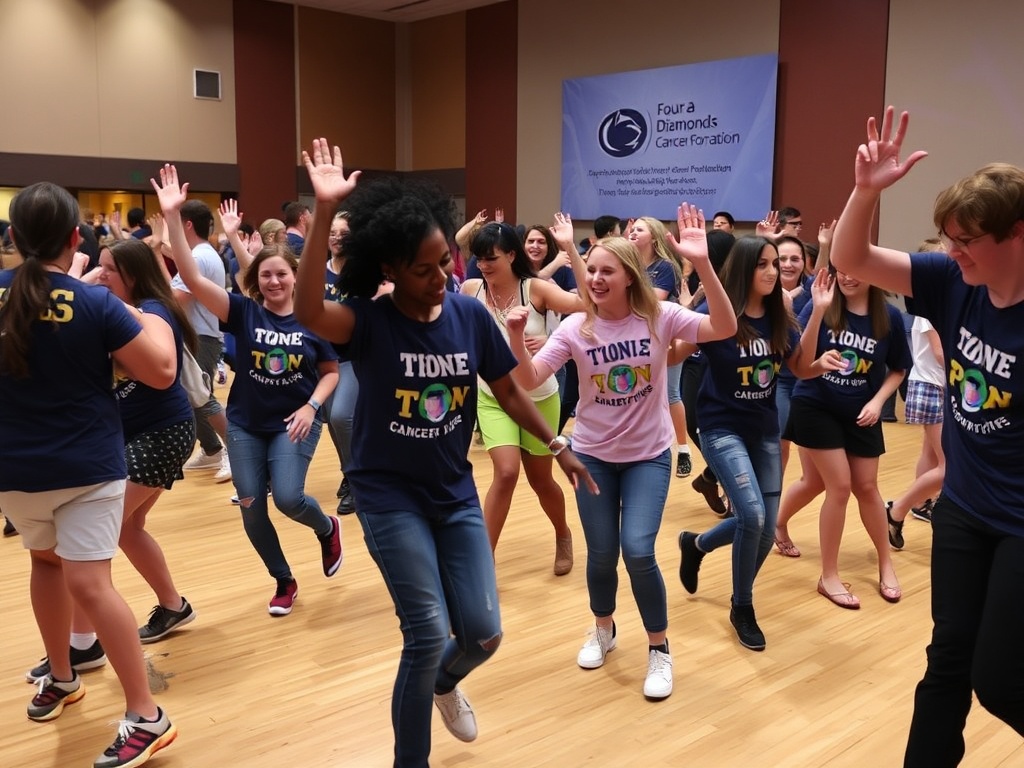
History of Penn State Dance Marathon
Penn State Dance Marathon represents a distinctive model of student philanthropy, evolving over nearly 50 years from a single dormitory dance event into the world's largest student-run philanthropy, generating over $16 million cumulatively for pediatric cancer research through Four Diamonds.
Founding and Early Years (1977-1990): A Grassroots Beginning
Penn State Dance Marathon was founded in 1977 when a group of Penn State University students organized a small dance marathon in a dormitory to raise funds for pediatric cancer research. The initial event was modest in scale, but the concept resonated with the student body, reflecting broader movements in American student activism during the 1970s toward socially conscious fundraising and community engagement. The early organizers recognized that students possessed unique power to mobilize peers and generate resources for charitable causes while building philanthropic leadership skills and values.
The connection to Four Diamonds, Penn State's beneficiary organization, emerged organically from the university community. Four Diamonds provides comprehensive support to children fighting cancer and their families, including financial assistance, emotional support, and advocacy. The partnership between Penn State Dance Marathon and Four Diamonds became foundational, with THON dancers and supporters building deep connections to the organization's mission and the children it serves. Personal stories from families affected by pediatric cancer became central to THON's culture, personalizing the cause and motivating sustained commitment.
Through the late 1970s and 1980s, Penn State Dance Marathon grew organically from a dormitory event to a larger campus tradition. The 46-hour dance marathon format emerged during this period, establishing the event's distinctive identity. Dancers committed to continuous dancing for 46 hours without sitting down, a physical challenge symbolizing dedication to the cause and commitment to the children Four Diamonds serves. The format created powerful bonding experiences among dancers and built community support as students, families, and faculty gathered to witness and support the event.
Expansion and National Recognition (1990-2005): Building a Movement
Growth of Penn State THON
The 1990s witnessed significant expansion of Penn State Dance Marathon as the event grew from a campus initiative to a major philanthropic enterprise. The Pennsylvania state capital location and Penn State's large student body provided advantages for growth, but the primary driver was student enthusiasm and commitment to the cause. The event expanded from the dormitory to larger venues, eventually requiring the university's largest indoor facility. By the early 2000s, Penn State Dance Marathon had become one of the largest student-run fundraising events in the United States, attracting dancers, volunteers, and supporters numbering in the thousands.
During this period, THON developed increasingly sophisticated organizational structures and practices. The organization established formal committee systems addressing fundraising, logistics, dancer recruitment, scheduling, and communication. Professional management practices emerged, with student leaders receiving training in nonprofit management, fundraising strategy, and event operations. The organization began tracking data on fundraising efficiency, donation patterns, and event participant satisfaction, utilizing metrics to improve operations continuously.
The 1990s also witnessed THON's expansion beyond the university campus into the broader Penn State community. Community members became involved as donors, volunteers, and supporters. Local businesses developed sponsorships and partnerships with THON, recognizing both the philanthropic value and marketing opportunities. Alumni networks strengthened THON support, with graduates maintaining connections to the organization and supporting it financially even after leaving campus. This broadening of THON's community base increased fundraising capacity and demonstrated the organization's social significance beyond the university.
National and International Expansion
By the early 2000s, Penn State Dance Marathon had achieved national recognition as the leading student-run philanthropy event in the United States. Media coverage increased substantially, with national news outlets featuring THON's fundraising achievements and the personal stories of Four Diamonds families. This media attention attracted attention from other universities interested in replicating the THON model. Penn State students began facilitating the establishment of THON-inspired events at other universities, though Penn State THON remained the largest and most successful incarnation of the model.
Organization and Structure: The THON Experience
The 46-Hour Dance Marathon
- • Continuous dancing for 46 hours without sitting down
- • Thousands of student dancers from across the university
- • Music, performances, and entertainment throughout the event
- • Four Diamonds children and families celebrated at final hours
- • Grand finale celebration and fundraising total announcement
Year-Round Engagement
- • Fundraising campaigns throughout the year
- • Committee work and event organization and preparation
- • Connections with Four Diamonds families and children
- • Training and leadership development programs
- • Community outreach and volunteer coordination
Modern Era and Global Impact (2005-Present)
The 2000s and 2010s brought continued growth and increasing recognition of Penn State Dance Marathon as the preeminent student-run philanthropy event globally. The organization consistently raised record amounts annually, with total fundraising reaching tens of millions of dollars cumulatively. The event's scale expanded further, eventually requiring multiple sessions to accommodate all dancers and supporters who wanted to participate. THON's success inspired similar dance marathon events at universities worldwide, though Penn State THON remained the largest and most successful incarnation.
The advancement of digital technology and social media transformed THON's fundraising and community engagement capabilities. Online fundraising platforms dramatically expanded the organization's reach beyond the Penn State community to alumni, supporters, and donors across the United States and internationally. Social media enabled THON to share stories and build emotional connections with supporters unable to attend the event in person. Virtual participation opportunities emerged, allowing broader engagement during periods when in-person events faced restrictions.
Today, Penn State Dance Marathon represents the world's largest student-run philanthropy event, raising over $1 million annually for Four Diamonds pediatric cancer research. The organization has evolved into a comprehensive learning laboratory for student leadership development, with participants gaining experience in nonprofit management, fundraising strategy, event operations, and community engagement. THON's success demonstrates the power of sustained student commitment, strong organizational structures, and deep connections to meaningful causes in mobilizing resources and creating social change. The organization continues evolving to address contemporary challenges while remaining faithful to its foundational mission of supporting children fighting cancer.
Community Impact and Social Responsibility
Penn State Dance Marathon's impact extends far beyond fundraising totals to transformative effects on individual participants, Four Diamonds families, and the broader philanthropic community. Student participants report profound personal growth through THON involvement, developing leadership skills, philanthropic values, and lifelong commitments to charitable giving and volunteering. Many THON leaders pursue careers in nonprofit management, social work, education, and other fields focused on community service, representing a pipeline of socially conscious professionals dedicated to improving society.
For Four Diamonds families, THON provides critical financial assistance, emotional support, and validation of their child's worth and significance. Participants meeting Four Diamonds children during the event's final hours experience profound emotional connections, understanding concretely how their efforts directly support children and families facing devastating circumstances. These connections sustain motivation and commitment, with many THON participants involved for multiple years, driven by relationships developed with families they've come to care about deeply.
Beyond immediate beneficiaries, Penn State Dance Marathon has influenced American student culture and philanthropic norms. The event demonstrates that students possess capacity for sustained, sophisticated fundraising and that college students can be mobilized for genuine social causes. THON has inspired similar events at hundreds of universities, creating a network of student-led philanthropy movements. The organization's success has influenced university leadership regarding the importance of supporting student-initiated charitable work and recognizing student capacity for community engagement and social responsibility.
Penn State Dance Marathon Core Values and Mission
Organizational Mission
- • Support Four Diamonds and families fighting pediatric cancer
- • Develop student leaders committed to philanthropy and service
- • Build inclusive community united around a common cause
- • Raise maximum financial resources for cancer research
- • Celebrate hope, resilience, and human connection
Core Values and Commitments
- • Nearly 50 years of continuous student-led philanthropy
- • Commitment to families and children fighting cancer
- • Student empowerment and leadership development
- • Transparency and accountability in fundraising and spending
- • Inclusive community building and peer engagement
Share Your Thoughts
Have thoughts or comments about Penn State Dance Marathon and its mission? We'd love to hear from you.